
Decree 06/2022/ND-CP and Decree 119/2025/ND-CP
Rules on greenhouse gas mitigation, emission allowance allocation and the exchange and offsetting of carbon credits. Decree 119/2025/ND-CP amends Decree 06/2022/ND-CP and took effect on 1 August 2025.
Carbon credits · MRV · Carbon markets
From greenhouse gas inventories and data audits through to developing and registering credit-generating projects and monetising those credits on domestic and international markets.
Book a carbon credit consultation
2,441
Facilities on the mandatory GHG inventory list under Decision 42/2026/QD-TTg
2029
Full operation of Vietnam's domestic carbon market (pilot phase runs to 2028)
1·2·3
Emission scopes covered under ISO 14064-1 and the GHG Protocol
2026
The EU CBAM enters its definitive application period
Vietnam now has a clear legal basis for both GHG inventory obligations and carbon credit trading. These are the milestones to track.
Rules on greenhouse gas mitigation, emission allowance allocation and the exchange and offsetting of carbon credits. Decree 119/2025/ND-CP amends Decree 06/2022/ND-CP and took effect on 1 August 2025.
The updated list of sectors and emitting facilities required to perform GHG inventories, covering 2,441 facilities. Companies should check the list to confirm their inventory and reporting duties.
Governs registration, coding, custody, trading and transfer of ownership for emission allowances and carbon credits. Preparation and pilot phase runs 2025–2028, with full operation from 2029.
International customers, ESG reporting and the EU Carbon Border Adjustment Mechanism turn emissions data into a commercial requirement, not just a compliance duty.
Take one module or the full package: measure emissions correctly, generate eligible credits, then commercialise them.
01
Measure and review emissions data to international standards so the file survives independent verification.
02
Turn energy and efficiency projects into recognised carbon credits.
03
Establish the market value of your credits and reach buyers under a sound contract structure.
The goal is an emissions dataset reliable enough for compliance filings, ESG reporting and as the basis for credit generation.
01
Survey and data collection
Define organisational boundaries and map energy flows, materials and existing data systems at the plant.
02
Inventory calculation
Calculate scope 1 – 2 – 3 emissions using emission factors applicable to Vietnam under ISO 14064-1 / the GHG Protocol.
03
Gap review and pre-audit
Check supporting records, reconcile figures and flag weaknesses a verifier is likely to reject.
04
Independent verification support
Prepare the file, respond to findings and work alongside the validation and verification body.
05
Reporting and mitigation roadmap
Hand over the inventory report, identify reduction opportunities and rank investments by marginal cost.
Credits only hold value when they follow an approved methodology, pass independent verification and sit under a clear sales contract.
01
Credit potential assessment
Screen the project, estimate potential credit volumes and the cost of development and verification.
02
Standard and methodology selection
Compare international standards with domestic mechanisms and pick the route that fits your sales goal.
03
Registration and issuance
Finalise project documentation, run the first monitoring period, coordinate verification and issuance.
04
Buyer sourcing and negotiation
Approach corporate buyers, climate funds and brokers; negotiate price, volume and delivery schedule.
05
Transfer and reporting
Complete ownership transfer and settlement, manage double-counting risk and report to stakeholders.
We prioritise projects that already have operating data and engineering records, which makes the credit file faster and more robust.
Rooftop solar and DPPA
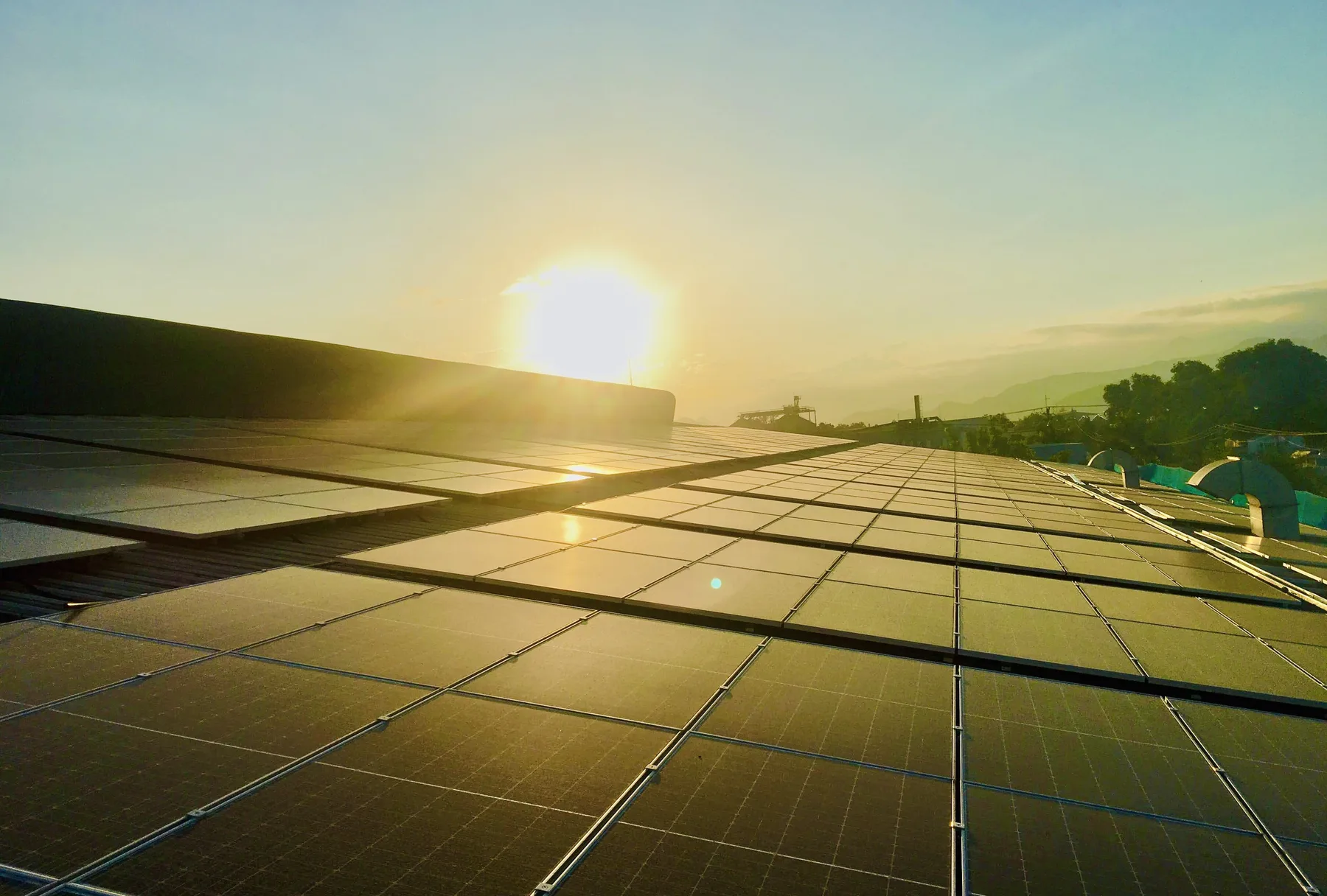
Self-consumption, ESCO or direct power purchase projects with fully metered generation data.
BESS and operational optimisation
Emission reductions from load shifting, diesel displacement and consumption profile optimisation.
Floating solar
Large reservoir and industrial water surface projects with complete design and yield simulation records.
Energy efficiency, biomass and biogas
Fossil fuel substitution in boilers, heat recovery and power generation from biogas.
Reference standards and mechanisms
ISO 14064-1 / GHG Protocol
Organisation-level inventory standards covering scope 1 – 2 – 3.
ISO 14064-2 and 14064-3
Project-level quantification of emission reductions, and validation and verification requirements.
International voluntary standards
Programmes such as Verra VCS and Gold Standard for credits traded on voluntary markets.
Domestic mechanisms and Article 6 of the Paris Agreement
Domestic exchange and offsetting plus international cooperation, where corresponding adjustments matter to avoid double counting.
You need to check the facility list in Decision 42/2026/QD-TTg together with the emission thresholds in force. We review that obligation for you free of charge at the outset.
Possibly, but it depends on the standard applied, the project's additionality and avoiding double counting against renewable energy attribute certificates or allowances already accounted for. Each project needs its own assessment.
Two main routes: the international voluntary market via standards such as Verra VCS and Gold Standard, and the domestic carbon exchange under Decree 29/2026/ND-CP, which is in its pilot phase until 2028.
A GHG inventory cycle typically takes 4 – 8 weeks depending on data quality. Developing and registering a credit project takes several months to over a year. Advisory fees follow the agreed scope of work.
RE100 & certificates
RE100 in Vietnam: what it is and how to meet it
What RE100 is, which sourcing options it recognises, and the four routes manufacturers in Vietnam use: on-site rooftop solar, private wire DPPA, grid-based DPPA (CfD) and I-REC certificates.
RE100 & certificates
I-REC: renewable energy certificates in Vietnam
What I-REC and REC mean, how certificates are issued and redeemed, how they differ from carbon credits, how they support scope 2 and RE100 reporting, and what to settle in a DPPA contract.
Advisory
DPPA consulting in Vietnam: what buyers actually need
DPPA advisory in Vietnam: eligibility screening, hourly load analysis, choosing private wire or grid-based DPPA, CfD cash-flow modelling, registration filings, contract negotiation and RE100/I-REC documentation.
Carbon & reporting
Carbon inventory and carbon credits: where to start
How a corporate carbon inventory works across Scope 1-2-3, how carbon credits differ from I-REC certificates, and how rooftop solar and DPPA cut Scope 2 emissions for CBAM reporting.
This page summarises the legislation in force at the time of writing (Decree 06/2022/ND-CP, Decree 119/2025/ND-CP, Decree 29/2026/ND-CP and Decision 42/2026/QD-TTg) for reference only and does not replace formal legal advice. Scope of work, credit volumes and sales prices are determined project by project.
Send us your last three electricity bills and Orca Energy will calculate generation, savings and the right investment option — free of charge.